Oxylabs, Decodo, Webshare, ScrapingBee, and Honeygain now formally sit under one Vilnius-based umbrella called Source
Source claims AI agents drove a fourfold increase in demand for services across its organizations
The brands, previously reviewed as rivals, including three of TechRadar's nine best-proxy picks, now officially share common oversight
Oxylabs, Decodo, Webshare, ScrapingBee, and Honeygain have formally come together under a single name, Source, and the Lithuanian group behind them says AI agents are why it needed one.
The Vilnius-based ecosystem claims demand across its companies has risen fourfold in a year as AI agents, next-generation search tools, and frontier AI products pull live data from the web.
Its systems now process 1.5 million requests per second, and that it is expanding into web search APIs built specifically for AI agents.
One umbrella with five different, competing shopfronts?
Source presents itself as a backbone rather than a business. Its launch post says it has no customers or products of its own; instead, it handles patents, procurement, hiring, and compliance, while each brand keeps its own team, product strategy, and customer base.
The brands are split by customer type. Oxylabs serves enterprises and AI labs; Decodo (formerly Smartproxy) targets the mid-market; ScrapingBee sells developer APIs; Webshare serves professional consumers and solo builders; and Honeygain pays ordinary people for their spare bandwidth.
For anyone shopping for a proxy service, this is the most practical takeaway. Oxylabs bought Webshare in 2022 and ScrapingBee in 2025, and Honeygain became its main residential proxy sourcing partner in 2021.
Decodo's ties were less clear-cut until now, and trade site Proxyway notes that the launch officially links Oxylabs and Decodo under one organization. Source CEO Vytautas Savickas ran Decodo until March 2026, when he moved across to lead the Oxylabs group and founder Julius Černiauskas became chairman.
All of this points to a marriage of convenience rather than a merger by organizations that are already very closely interlinked. This is interesting because some of these brands have been sold and reviewed as alternatives to one another.
The best example of this is that three of the nine picks in TechRadar's own best proxy sites guide now belong to Source: Decodo as best overall, Oxylabs as best for business, and Webshare as best for privacy.
For context on the overlap, our residential proxy roundup described Oxylabs as one of Decodo's toughest competitors. Source says the companies remain fully independent in strategy, customers, and market presence, and that may well hold commercially, but common oversight is now a matter of record.
The release provided to TechRadar says Source gives the group "a unified voice in defending responsible access to public web data," and its legal history explains the appetite.
Reddit sued Oxylabs alongside Perplexity, SerpApi and AWMProxy in October 2025, alleging they evaded its anti-scraping measures by lifting Reddit content from Google search results. Oxylabs said it was "shocked and disappointed" and would defend itself.
Source's own essay on AI agents and the open web argues that if access is negotiated one licensing deal at a time, only the biggest companies will be able to afford it. This makes a convenient argument for a large web scraping group, but the gatekeeping fears are real.
The most concrete product promised here is AI search, and it is older than the umbrella itself: Oxylabs already offers a Web API that pairs a search endpoint with a scraping endpoint for agents, so the "dedicated AI Search APIs" promised look more like an expansion of existing work than a new product line.
For customers, the questions to watch are whether the brands keep competing on price, how clearly each one discloses their newfound relationship, and how the Reddit case plays out for Oxylabs.
For everyone else, Source is a bet that AI agents will keep needing the live web, and that the companies supplying the pipes deserve a seat at the table when the rules for that access get written, aiming to negotiate from a clustered position of strength.
EcoFlow has been one of those portable power station brands that has scored consistently high marks in our tests. They're an easy recommendation based on our reviews, offering everything from small off-grid units to full emergency home backup power supplies.
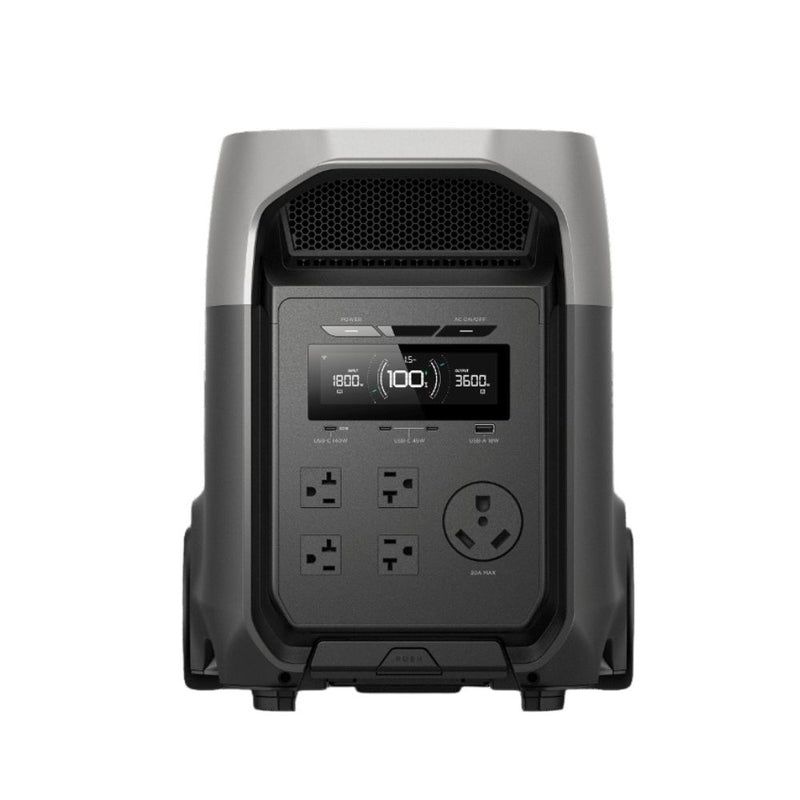
Now, Prime Day might be over, but EcoFlow is still offering great deals on its own site in an extended sale that runs until October 18. Of all the backup options currently discounted, the one worth checking out first is the EcoFlow Delta 3 Ultra, a 3072Wh power station built for powering large appliances.
• Best for: Homeowners preparing for power outages, people who need backup electricity for essential equipment, and anyone looking for a high-capacity portable power station.
Delta 3 Ultra Portable Power Station: was $1599 now $1349 This portable power station features 3072Wh LFP battery capacity, 3600W continuous output, 7200W surge power, 89-minute fast charging, 10ms automatic switching, quiet operation, smart app control, and home backup connectivity options.View Deal
Why we recommend it
The EcoFlow Delta 3 Ultra has a 3,072Wh battery that offers enough stored energy to keep essential equipment running during shorter outages. It delivers 3,600W of continuous AC output, with a 7,200W surge rating to accommodate the brief startup demands of compatible appliances.
EcoFlow's X-Boost technology can support certain appliances rated up to 4,600W by adjusting the supplied voltage. EcoFlow says the battery can reach 80% in just 89 minutes using a suitable AC or generator charging setup. Batteries are rated with a ten-year lifespan.
Price context & historical value
EcoFlow has reduced the Delta 3 Ultra from $1,599 to $1,349 as part of its Prime Day Fall Extended Sale. That's a saving of $250, around 16% off the standard price. It's not the cheapest it's been however. It was on sale for $989 at Wellbots for Black Friday last year.
Should you buy it?
✅ Buy the Delta 3 Ultra if...
You want a high-capacity battery backup for your home. The 3,600W output makes it suitable for a wider range of appliances than smaller portable power stations.
❌ Skip the Delta 3 Ultra if...
You only need to charge phones, tablets, or a laptop occasionally. A smaller, cheaper power station would be a better option.
More EcoFlow deals
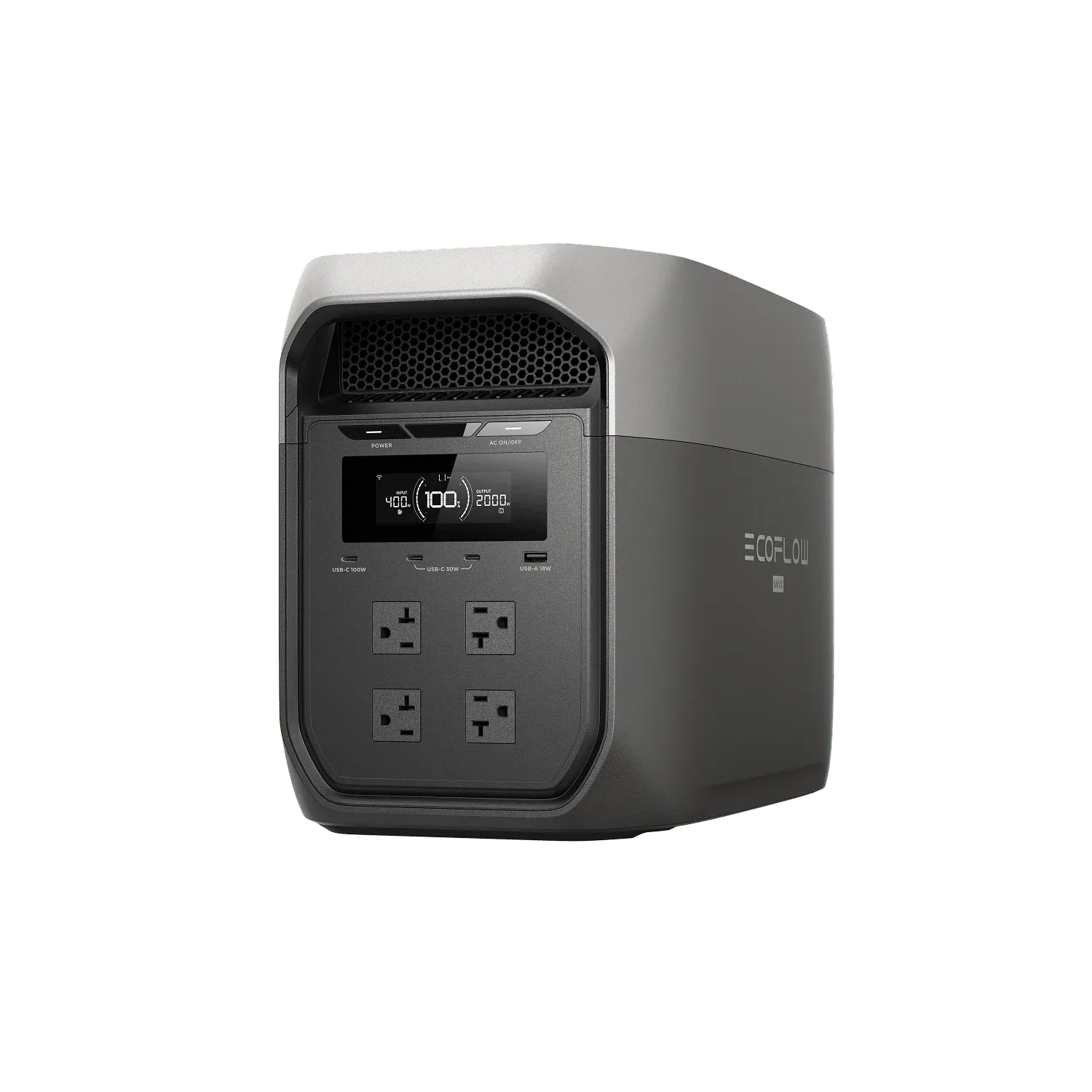
Delta 3 Max Series Portable Power Station: was $1199 now $899 This portable power station offers 2048Wh capacity, 2400W output, 4800W surge power, 68-minute fast charging, lightweight design, LFP battery technology, 10ms automatic switching, quiet operation, and smart app control features.View Deal
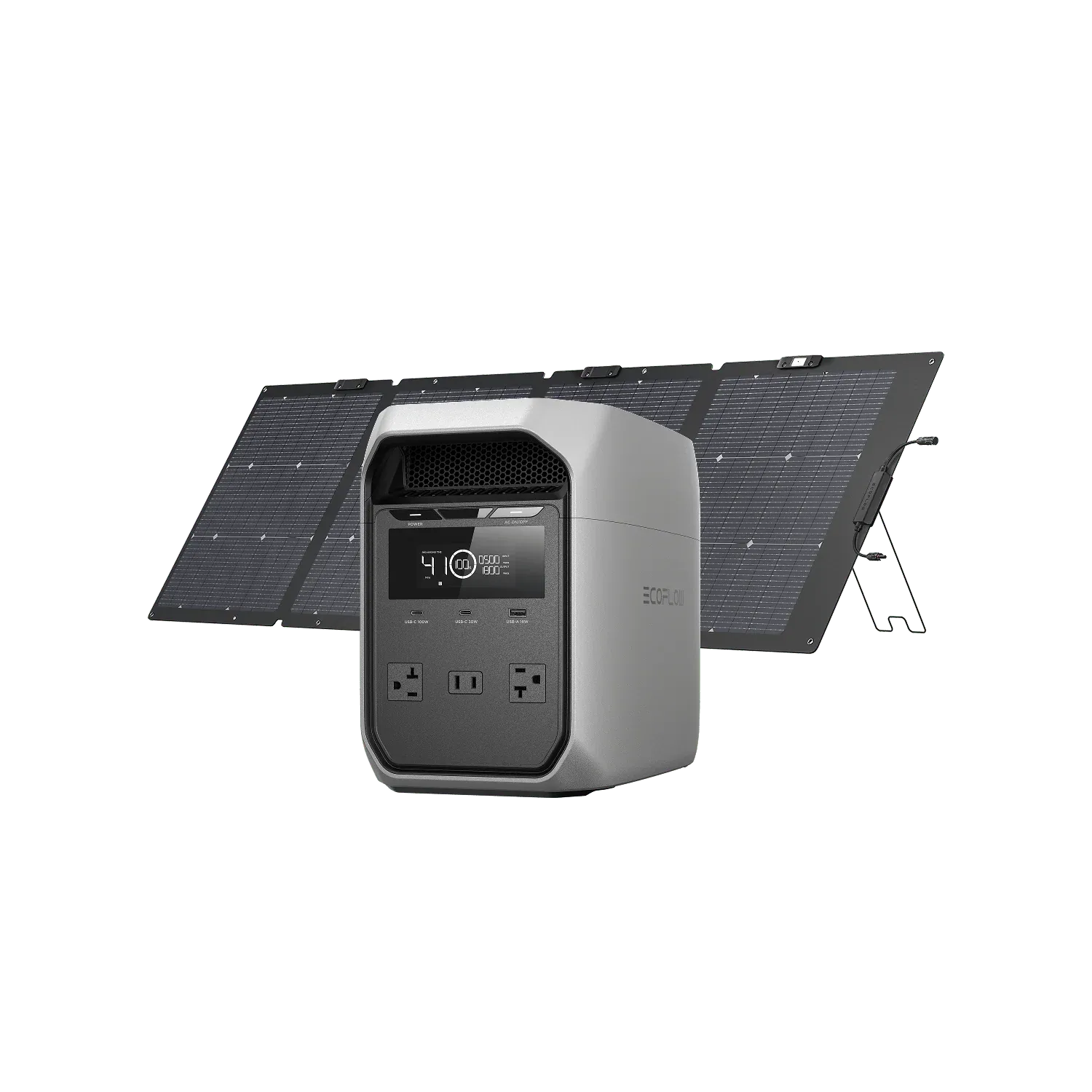
Delta 3 Ultra Plus Portable Power Station: was $2199 now $1599 The Ultra Plus features 3-11kWh expandable capacity, 3600W output, 7200W surge power, six charging methods, 48-minute fast charging, LFP batteries, smart output prioritization, 10ms automatic switching, and app-based controls.View Deal
The Celebrity Traitors is back with episode 5 tonight, and it can't come quick enough. 6 days is far too long to be left wondering whats happening to what's left of this year's cohort of Celebs in The Traitors' castle.
When we left them, Rob, Romesh, Ross and Leigh-Anne were running to the crypts for a deadly game of hide and seek. In a moment of chivalry, which Romesh disagreed with steadfastly, but begrudgingly accepted in the end, the three men agreed to give Leigh-Anne a key which guarantees her safety.
Episode 5 airs tonight, October 15 at 8pm BST, and you can watch The Celebrity Traitors online from anywhere with a VPN (75% off) and potentially for free.
In case you missed the first four episodes, here's a quick rundown to get you up to date.
The two original Traitors were Richard E. Grant and Maya Jama. they decided to go with two very different styles of game play... Maya Jama played the game as you're meant to, while Richard E. Grant immediately told everyone he was a traitor. Unsurprisingly, he was voted out at the first Round Table.
The Traitors have since been recruiting, meaning that the line-up of backstabbers now includes James Acaster and Prof. Hannah Fry.
Those among the dead include Bella Ramsey, of The Last Of Us fame and Amol Rajan, of Amal Rajan fame.
After successfully voting out a traitor in the first round table, the faithfuls banished two of their own; Julie Hesmondhalgh and Myha'la.
Who will be next to be murdered, and will the faithfuls manage to sniff out a traitor?
Read on as we explain how to watch episode 5 of The Celebrity Traitors 2026 from anywhere – including the spinoff Celebrity Traitors: Uncloaked and the final on Friday, October 30.
Can I watch The Celebrity Traitors for free?
Yes. Faithfuls (and everybody else) in the UK can watch The Celebrity Traitors FREE of charge on BBC One and the channel's BBC iPlayer streaming platform and app. Episode 1, Episode 2, Episode 3, Episode 4 are streaming now; Episode 5 airs on Thurs, Oct 15.
Season 2 of Celebrity Traitors streams for free in UK on BBC iPlayer. The streaming service doesn’t require an account or subscription – merely a TV licence. Stream and watch away.
If you're keen to watch The Celebrity Traitors S2 but you're away from home and access to the show is geo-blocked, you can always use a VPN to access it (assuming you're not breaching any broadcaster T&Cs, of course). You may be surprised by how simple it is to do.
Use one of the best VPNs to watch The Celebrity Traitors 2026 (season 2) from anywhere:
Not having a VPN is like leaving your front door wide open in a busy city – anyone can walk right in and take a peek.
TechRadar regularly reviews all the biggest and best VPN providers and NordVPN is our #1 choice.
✅ 75% Off Today ✅ 3 Extra Months Free ✅ Unlocks BBC iPlayer
Get NordVPN and stream The Celebrity Traitors for free.View Deal
Using a VPN is incredibly simple:
1. Install the VPN of your choice. As we've said, NordVPN is our favorite.
2. Choose the location you wish to connect to in the VPN app. For instance, if you're visiting the US and want to view your usual UK service, you'd select a UK-based server from the list.
3. Binge the backstabbing. Head to your usual local streaming service and watch Traitors.
Can I watch The Celebrity Traitors UK in the US?
The Celebrity Traitors (2026) will arrive on Peacock in "Q4 2026", which is not a surprise – NBC/Peacock is home to all things The Traitors. The US release date is due to be announced shortly.
If you're a UK resident who is currently across the pond, a VPN will help you tune in to your BBC. NordVPN is our recommended provider, and you can find out why with our in-depth NordVPN review.
Can I watch The Celebrity Traitors 2 in Canada?
In Canada, subscription service Crave is streaming all 4 episodes of The Celebrity Traitors season 2. Viewers can also chose between French and English.
Crave plans start from CA$11.99 a month and offers classic HBO series, on-demand movies and Crave originals alongside TV shows such as The Traitors.
Visiting Canada from the UK?Use a VPN to watch The Celebrity Traitors season 2 online – plus all the other content you'd normally stream at home.
Can I watch The Celebrity Traitors season 2 in the UK?
The Celebrity Traitors continues tonight, Thursday, 15 October 2026 at 8pm on BBC One and BBC iPlayer.
The series airs two nights a week on Thursday and Friday evenings at 8pm.
Visiting the UK? from IrelandUse a VPN to access your usual The Celebrity Traitors on iPlayer.
Can I watch The Celebrity Traitors 2 in Australia?
The Celebrity Traitors season two is available in Australia for free on 10.
Fans can catch up on the first 4 episodes, as well as watch new episodes at exactly the same time as they air in the UK. All you need is a 10 account, and they're completely free.
Outside Australia? NordVPN will help you gain access to free 10 streams while you're out of the country.
Can I watch The Celebrity Traitors 2 in New Zealand?
For Kiwi viewers, The Celebrity Traitors UK season 2 will stream on ThreeNow starting October 4 – three days after it starts in the UK on BBC iPlayer.
Visiting New Zealand? Grab this VPN (75% off) now to watch all your usual British streaming services when traveling.
Missed the first 4 episodes?
First of all, sorry for the spoilers. However, there's good news! You can catch up with the first 4 episodes of The Celebrity Traitors for free via BBC iPlayer (as long as you've been faithful and paid your license fee).
Not in the UK? Have no fear. You can access your iPlayer from anywhere in the world with a VPN.
The Celebrity Traitors series 2 (2026) – Need to Know
Who is in The Celebrity Traitors 2 cast?
Amol Rajan — journalist and broadcaster
Bella Ramsey — actor (The Last of Us, Game of Thrones)
James Acaster — comedian and podcaster
James Blunt — singer-songwriter
Jerry Hall — model and actor
Joanne McNally — comedian
Joe Lycett — comedian
Julie Hesmondhalgh — actor (Coronation Street)
King Kenny — YouTuber/content creator
Leigh-Anne Pinnock — singer, formerly of Little Mix
Maya Jama — presenter
Michael Sheen — actor
Miranda Hart — comedian, actor and author
Myha’la — actor (Industry)
Professor Hannah Fry — mathematician and broadcaster
Richard E. Grant — actor
Rob Beckett — comedian
Romesh Ranganathan — comedian
Ross Kemp — actor and presenter
Sebastian Croft — actor (Heartstopper)
Sharon Rooney — actor (My Mad Fat Diary)
The Celebrity Traitors 2 trailer
How many episodes of The Celebrity Traitors season 2 are there?
There are 10 episodes in The Celebrity Traitors series 2 – one more than season one, which had nine.
It continues Thursday, 15 October 2026 at 8pm BST on BBC One and BBC iPlayer, with episodes airing Thursday and Friday evenings in Great Britain.
Episodes 1-4 are available now on BBC iPlayer, with Episode 6 out at 8pm on Friday, Oct 2.
Episodes 7 and 8 are available next week, on October 22 and 23, respectively.
We test and review VPN services in the context of legal recreational uses. For example:1. Accessing a service from another country (subject to the terms and conditions of that service).2. Protecting your online security and strengthening your online privacy when abroad.We do not support or condone the illegal or malicious use of VPN services. Consuming pirated content that is paid-for is neither endorsed nor approved by Future Publishing.
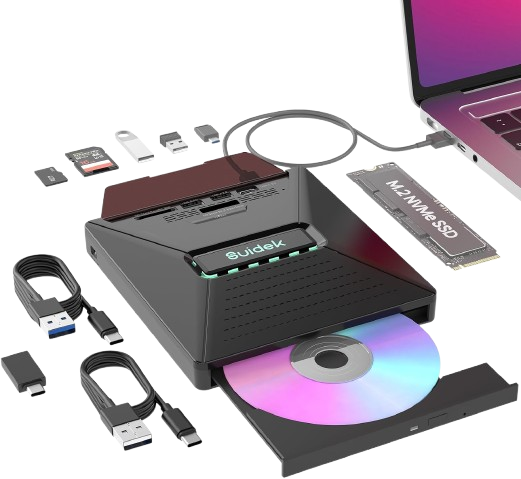
As physical media makes a comeback, we've been tracking some of our favorite external CD/DVD writers. And while most do exactly that, this external drive from Suidek does...well, I won't say everything, but it does a lot.
Alongside playing and burning CDs and DVDs, as you'd expect, it also has six other ports - notably, an M.2 NVMe interface with 10Gbps transfer rates. There's also two USB-A 2.0 and a single USB-C port, and SD and microSD card slots. So, it goes well beyond a device to creating and playing traditional physical media.
• Best for: Collectors, archivists and laptop owners who want a disc drive that also reads cards and SSDs.
External CD/DVD Drive: was $49.99 now $44.99 The drive reads CDs at 24x and DVDs at 8x and burns full-size discs at the same speeds, while 80mm discs are read-only. The 7-in-1 design adds an M.2 NVMe slot, SD and microSD readers, a USB-C port and two USB-A ports, all running at USB 2.0 speeds. It works with Windows, macOS and Linux devices. View Deal
Why we recommend it
This is an easy way to rip a shelf of CDs and DVDs or burn a backup disc without a built-in drive. The M.2 NVMe slot and SD readers are what set it apart from plain optical drives, so it can also double as a card reader or a bare-drive enclosure. It has a 4.2-star average across more than 1,400 Amazon ratings.
Price Context & Historical Value
At $44.99, this is $5 (10%) off the $49.99 list price, so the saving is small. Plain external DVD drives on Amazon are cheaper, so you're paying for the card readers and the M.2 slot. The lowest price I've seen this CD/DVD writer fall to is $40, typically around sales seasons like Prime Day and Black Friday. So, a fair deal - I wouldn't recommend paying full price, as it often has a discount like this.
Should you buy it?
✅ Buy the Suidek 7-in-1 external CD/DVD drive with M.2 NVMe slot if...
You want to rip or burn CDs and DVDs and also need an SD card reader or an M.2 NVMe slot in one device.
❌ Skip the Suidek 7-in-1 external CD/DVD drive with M.2 NVMe slot if...
You need Blu-ray support, fast file transfers, since all the ports are USB 2.0, or only want to play discs, since plain drives cost less.
More CD/DVD writer deals
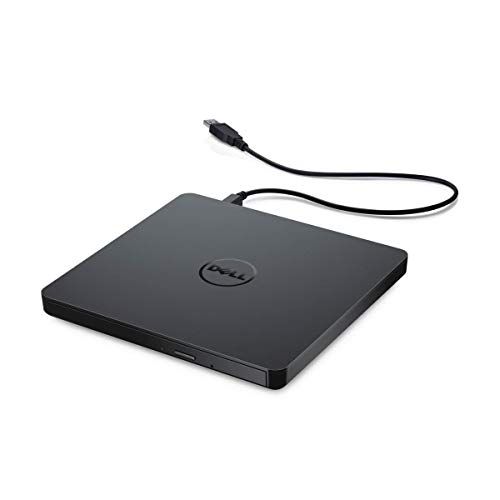
External USB Slim DVD-RW Drive: $29.99 The Dell DW316 is a lightweight and slim 14mm external USB DVD writer, with CD and DVD reading and writing, USB power, and plug-and-play operation. The CyberLink Media Suite 12 software is included free.View Deal
Zendrive Black External DVD Burner: $44.99 This 13mm external DVD writer supports 8x DVD and 24x CD speeds, M-DISC archival media, USB-A and USB-C connections, Windows and Mac compatibility, Disc Encryption II, and Nero BackItUp software.View Deal
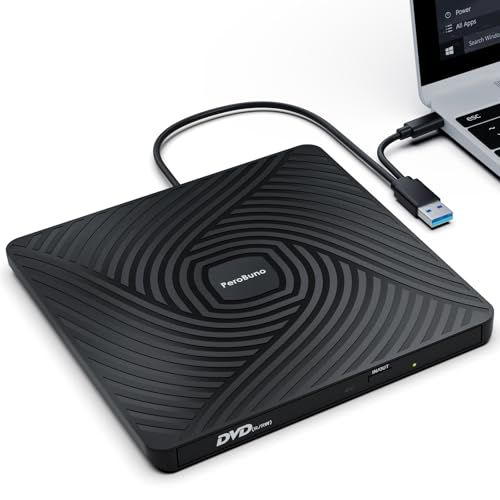
External DVD Drive: $19.99 This DVD writer keeps things simple with a slim 13mm body and built-in USB-A and USB-C cables. USB 3.0 support delivers steady speeds, with up to 24x CD and 8x DVD read and write performance across multiple operating systems.View Deal
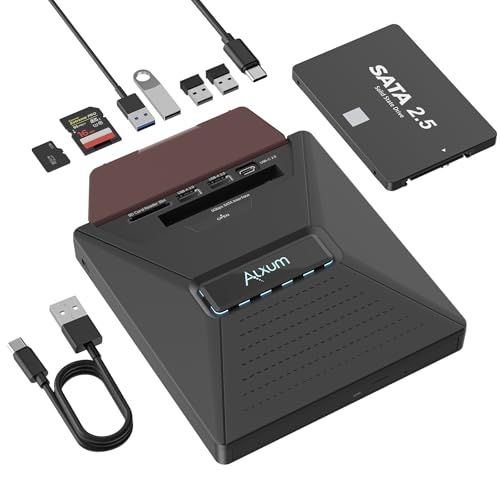
External DVD Drive: was $47.99 now $41.75 The Alxum model adds extra flexibility with three USB ports, SD and microSD slots, and support for a 2.5-inch SATA drive. It handles 24x CD and 8x DVD speeds, while also allowing file transfers between discs, cards, and connected storage devices.View Deal
Nvidia claims that for each gigawatt an AI data center uses, only 70% is used for AI work
Inefficiencies include cooling and power distribution, failures, and restarts
While a chip shortage was considered to be the main bottleneck to AI data center capacity, it is now a facility’s connection to the grid
AI data centers are inefficient, says Nvidia, with various physical and systems issues contributing to power use beyond AI processing. This opinion, shared by data center builder Vertiv at its recent annual EMEA event, underpins future development steps, in which it plans to assemble sustainable facilities.
Vertiv and Nvidia have been collaborating since early 2026 on co-designing the next generation of data centers, with Vertiv providing power and infrastructure management for Nvidia’s GPUs.
With a maximum of 70% of electricity drawn from the grid used for AI processing, the remaining 30% represents inefficiencies that optimized data center designs for the future should reduce.
That's not efficient
Although the various inefficiencies affecting AI data centers may not come as a surprise, the scale of them might. According to Nvidia – via its Vice President of Supercomputing, AI Cloud Infrastructure, and AI/HPC for EMEA Rod Evans – that 30% consists of infrastructure and system issues.
For a one-gigawatt data center, 20% is lost through cooling, power distribution, and conversion. A further 10% is lost to incorrectly configured racks, as well as failures and restarts.
Evans says that “You sign a contract for 100 megawatts, but you never actually get that. With a bit of luck, you’ll get 93 megawatts, and at certain times of the day, even less.”
Nvidia believes some of the 30% (which can be as high as 40%) can be recovered. Evans notes that “A data center is actually designed for peak load and outages, not for what it typically uses.” This means that unused capacity can be tapped, and power and cooling can be revised to find the optimum configurations.
Bottlenecks of power
Rod Evans states that Nvidia and Vertiv are planning data centers that are more efficient and sustainable. “Together, we want to build sustainable AI data centers where the focus isn’t on using as much power as possible, but on getting the most out of every watt.”
One of the most significant details from the press conference is the challenge posed to AI data centers not by a shortage of chips, but by a lack of power. Bottlenecks are resulting in underpowered data centers, with some waiting for several years to receive the power to match their capacity.
This can be impacted by location. Vertiv’s EMEA president Paul Ryan explained that while you can get power in some locations but no permit. “In another, the permit is granted quickly, but there’s no power. And sometimes you have both, but the location is so remote that you can barely get the equipment there.”
The US exported 7,592 military drones, narrowly ahead of Iran's 6,800
Iran overtook America in 2025 after US deliveries dropped to 402
Russia received 99% of Iran's exported drones, mostly Shahed-136 attack systems
The United States exported the most military drones between 2022 and 2025, narrowly beating Iran, which ranked second worldwide during the period.
Data from the Stockholm International Peace Research Institute (SIPRI) records 7,592 American exports against 6,800 Iranian deliveries, while Germany ranked a distant third with 1,000 exports.
Together, the US and Iran accounted for 86% of global exports, with Ukraine receiving 95% of American shipments while Russia got 99% of Iran’s deliveries, most of which were Shahed-136 one-way attack drones.
Iran overtakes the US as exports shift
Although Washington maintained the lead across most of the period, annual figures changed significantly in 2025, when Iranian deliveries exceeded American shipments.
Iran exported 2,002 drones that year, compared with 402 delivered by the United States.
The decline of American shipments is due to the suspension of military assistance to Ukraine, which had received most US exports during the preceding years.
Subsequent American deliveries were directed mainly toward Taiwan, marking a change in the destinations receiving these systems.
The figures cover military drones weighing at least 150 kilograms, equivalent to approximately 331 pounds, including loitering munitions and one-way attack aircraft.
Small first-person-view drones and commercial models were excluded, meaning the figures do not capture every type of unmanned aircraft supplied internationally.
One-way attack platforms accounted for 97% of recorded exports, indicating that expendable systems dominated the shipments measured by SIPRI during the period.
Their prevalence also explains why the figures should not be interpreted as a comprehensive count of military drones worldwide.
Poland and others trail the leading exporters
In addition to the top exporters, within the same period, Poland exported 690 drones to take fourth place whileTurkey occupied fifth place with 381 exports, despite supplying customers across a considerably wider international network.
Ankara delivered drones to 28 countries, including Pakistan, Kuwait and Romania, which belong to the North Atlantic Treaty Organization (NATO).
Its Bayraktar TB2 accounted for 58% of worldwide exports of reusable drones, distinguishing Turkey’s position within that category.
The Czech Republic, Sweden and the next seven countries in the rankings collectively exported just 89 drones, considerably fewer than Germany or Poland.
Their combined deliveries also fell far below Turkey’s total, despite the latter ranking behind both European countries in overall export numbers.
The figures therefore distinguish the country’s leading total military drone shipments from those supplying particular categories of aircraft.
However, SIPRI’s weight threshold and exclusion of smaller commercial and first-person-view models limit comparisons with estimates covering the entire unmanned aircraft market.
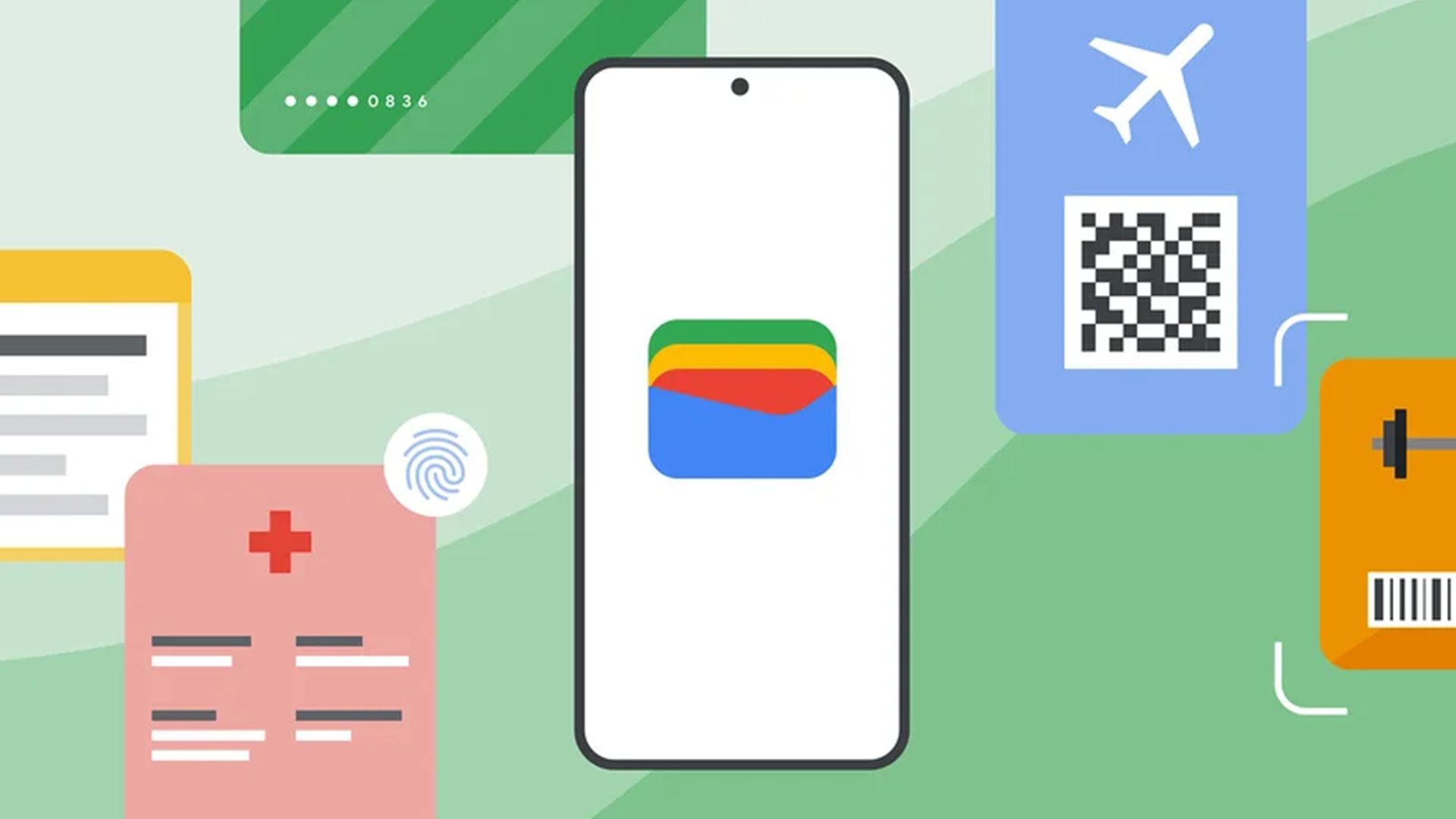
The latest Google Play Services update brings four upgrades to Google Wallet
The biggest of these is the ability to scan and store receipts
It also adds an in-app message center, improved merchant names, and a smoother payment process
If you have an Android phone then you’re probably already using Google Wallet, and with the latest Google Play Services update it’s getting slightly better in four ways.
As spotted by Android Police, the October Google Play Services update (v26.40) is rolling out now, and it — among other things — brings the ability to scan receipts into Google Wallet, so you’ll be able to save and view them in the wallet interface.
Additionally, this update improves merchant names in transaction notifications. Google hasn’t specified how they’re improved, but presumably this is aimed at providing more clarity about who or what you’ve sent money to.
More messages and fewer payment screens
(Image credit: Google)
The update also adds an in-app message center to Google Wallet, and while it’s not clear what kind of messages you might receive, we can imagine they might for example tell you about updates to the service — such as the ones we’re writing about here.
Finally, if you use Google Pay through Chrome for Android, the update lets you now “skip the Payment Request UI when you provide merchants with your name, email, and phone number.” That presumably makes for a faster, smoother payment process.
So while none of these upgrades are individually massive, combined they should make for a notable difference to your Google Pay experience.
The update will roll out automatically, so if you’re not seeing these changes yet, you likely will do soon. But to check what version of Google Play Services you have, you can head to Settings > Apps > Google Play Services, and you should see the version number at the bottom of this screen.
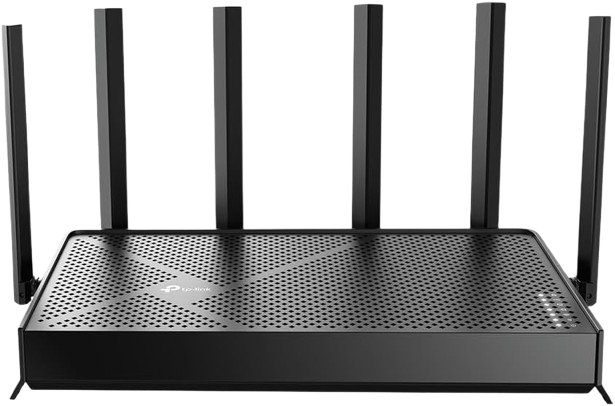
If your internet plan or devices have outgrown your old router, TP-Link's Archer BE670 Wi-Fi 7 model has on a good discount right now with all the features I recommend.
• Best for: Multi-gig or fiber households and home offices that want a fast tri-band Wi-Fi 7 router with room to grow.
• Why it matters: There are several reasons why I like this router deal. Notably, it's a tri-band model, so you get the full feature-set of a Wi-Fi 7, including 2.4GHz, 5GHz, and 6GHz bands with MLO support for seamless roaming. With six antennae, it covers up to 2,600 sq. ft. for up to 128 devices. And the 10Gbps WAN/LAN port means the router won't be the bottleneck if you have or plan an upgrade to a multi-gig internet plan.
BE670 Wi-Fi Wi-Fi Router: was $299.99 now $249.99 The BE670 is a BE12000 tri-band router with speeds up to 5,765 Mbps on 6 GHz, 5,765 Mbps on 5 GHz, and 688 Mbps on 2.4 GHz. It adds 320MHz channels and Multi-Link Operation, plus one 10Gbps WAN/LAN port, one 2.5Gbps WAN/LAN port, three 1Gbps LAN ports, a USB 3.0 port, EasyMesh support, and HomeShield security. TP-Link says it supports up to 128 devices, and Amazon sells and ships it.View Deal
Why we recommend it
For me, the port layout sets it apart at this price: a 10Gbps port and a 2.5Gbps port sit alongside Wi-Fi 7, so it should keep up with fiber plans and fast wired devices as you upgrade. Tri-band Wi-Fi 7 with Multi-Link Operation also lets compatible phones and laptops use more than one band at once, though your devices need Wi-Fi 6E or Wi-Fi 7 to benefit for the fastest speeds.
Price Context & Historical Value
At $249.99, this is $50 (17%) off Amazon's $299.99 list price. According to CamelCamelCamel, that's almost the lowest price new since March - although Keepa suggests it dropped to $230 in June. So, it's about what I'd expect to pay for a Wi-Fi 7 router outside of a sales event like Prime Day or Black Friday.
Should you buy it?
✅ Buy the TP-Link Archer BE670 Wi-Fi 7 router if... you have a multi-gig internet plan or lots of wired gear, and you want a Wi-Fi 7 router with a 10Gbps port.
❌ Skip the TP-Link Archer BE670 Wi-Fi 7 router if... you only have a gigabit plan and a handful of devices, since cheaper Wi-Fi 7 routers will do, or you want a tested pick, since we haven't tested the BE670 ourselves and it has only 125 Amazon ratings so far.
The Sony ULT Tower 5 is one of the stand-out audio products I've reviewed in 2026. In many ways, it defies belief. Despite being pretty small for a traditional party speaker, it produces almighty audio, with the sort of bass you’d expect from a model twice its size. And, what’s more, it's pretty affordable.
Sony has made a bunch of changes to its new ULT range, and they appear to have paid off. Perhaps the highest-profile change is the shift towards newly developed rounded woofers, marking a departure from the almost rectangular X-Balanced woofer units seen on previous ULT models. The tech giant told me that this was in an effort to maximize deep bass — something that’s crucial for a party environment. And this, in my view, was a great choice.
As with all of the best Bluetooth speakers in this size-class, the ULT Tower 5 plates up incredibly powerful yet regimented low-end output. When tuning into Everytime by Jesse Maas, the house track’s pumping deep bass was replicated to an excellent standard — it was agile and rhythmic, while also remaining driven and meaty. And this never came at the expense of other sounds in the frequency range, with electronic elements and vocals in the mid-range given plenty of room to breathe, and higher-pitched drums cutting through with precision.
(Image credit: Future)
Here, I was using the 'ULT 2' EQ mode, which delivers a powerful yet rounded performance. With ULT 1 mode, deep bass is prioritized, and I found this to be ideal for outdoor environments. For instance, when I tuned into First Summer by H.K., I was mesmerized by the richness and rippling power of the low-end, which was undeterred by wind noise, cars driving past, and other ambient sounds. This mode will also work brilliantly for large open indoor spaces, but is ill-suited to the acoustics of smaller rooms. It’s worth flagging that the ULT Tower 5 has a maximum power output of 300W, so it can also get super loud, no matter where you are.
Other energetic tracks, such as What We Got by Midas Field and Marijn Jansen, also sounded impeccable on the ULT Tower 5. The speaker showed off its impressive handling of dynamics with impactful bass drops, produced textured vocals in the build-up, and even created a wide, expansive soundstage for this speaker's size, with the angled tweeters conjuring up an impressive sense of space. However, the ULT Tower 5 does lack the 360 sound that its larger siblings have due to the lack of rear-facing drivers, and I definitely felt like audio wasn't anywhere near as full-sounding when listening from the side or back of the speaker.
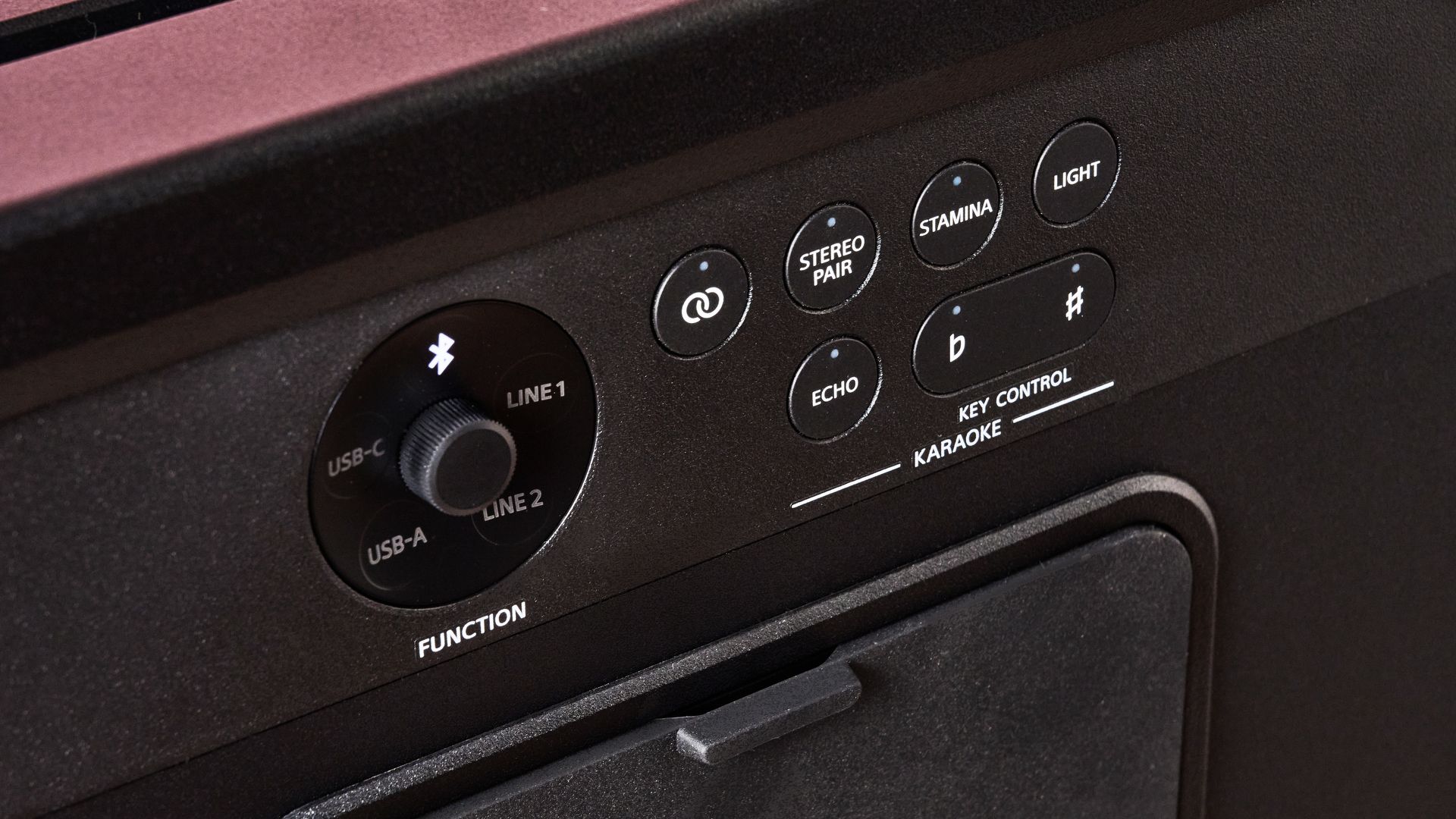
This is a party-first speaker, of course, but there is a Flat EQ mode if you want to listen to more stripped-back tracks, and it works well — especially if you want to enjoy resonant and detailed vocal performances. This does take a lot of weight out from the low-end, though, so it's a bit more situational than the ULT 1 and 2 options. There’s also a Live mode, which is intended to create a more realistic replication of live recordings, or a 10-band custom equalizer if you want to make more granular changes — the ULT Tower 5 is incredibly versatile.
(Image credit: Future)
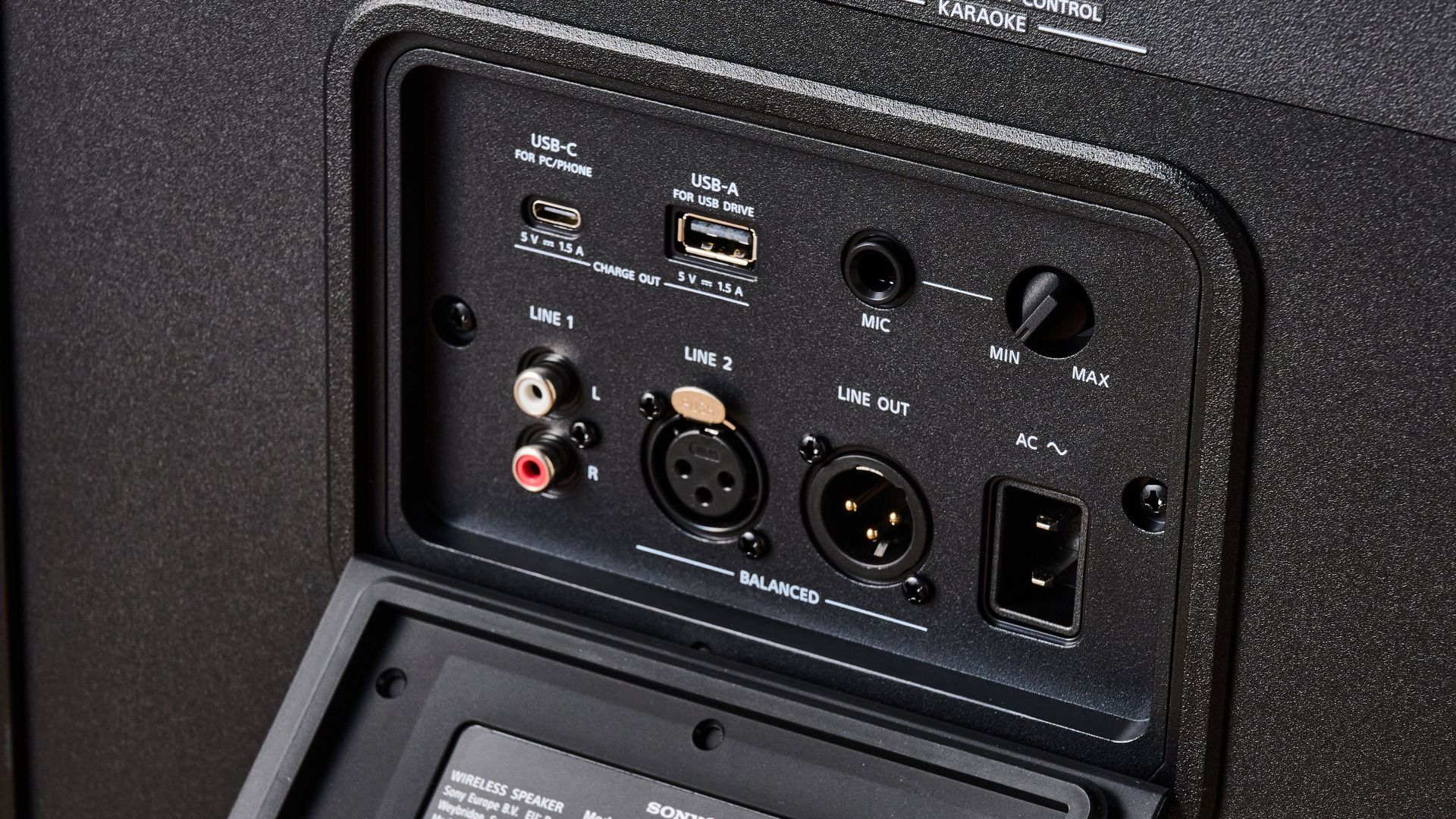
I mainly streamed over Bluetooth when testing, and had Sony’s very own LDAC codec active, which enables higher-res listening if your device supports it — something that a lot of party speakers skip on. However, you can connect to the speaker in so many other ways. There’s a USB-A port if you want to listen to tunes from a USB drive, there’s USB-C, XLR, and even RCA if you want to hook up a DJ controller or turntable. The audio quality and connectivity options available mean that this model is well-suited to casual or even professional use.
There’s also a port that lets you plug in a mic for some karaoke, if that’s your thing. The speaker has built-in effects for karaoke, like a voice changer, echo, and the like. There’s also a party pad for playing sound effects, drum sounds, robotic noises… you name it.
If you have multiple ULT Towers, there’s also the option to link them up with Party Chain. I tried pairing the ULT Tower 5 with the Tower 7, and all it took was a simple button press on each model. It was quick, easy, and produced an even more mighty sound. When I went to a demo for Sony’s new ULT range, I even got to hear ten ULT Towers daisy chained together, which opened up devastatingly powerful sound.
A lot of the functions I’ve described, like EQ tweaking, the party pad, switching connectivity method, and more, are available through the Sony Sound Connect app. While a lot of rival apps have a tendency to be buggy or awkward to navigate, Sony’s control app was phenomenally easy to use, rich in features, and reliable at all times. It also has options like Sound Field Optimization, which automatically detects external noise and adjusts sound accordingly, as well as power conservation and light customization settings.
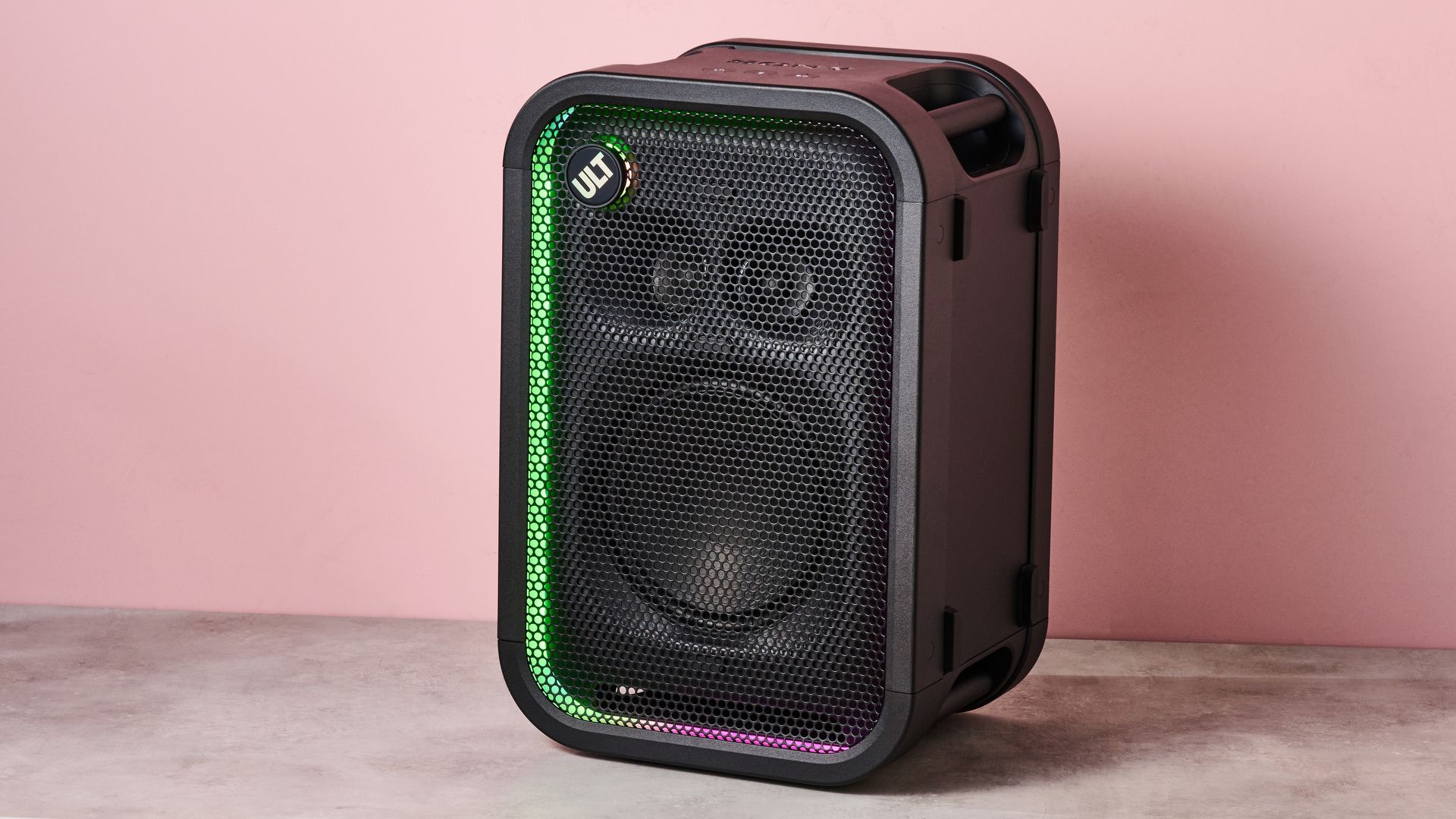
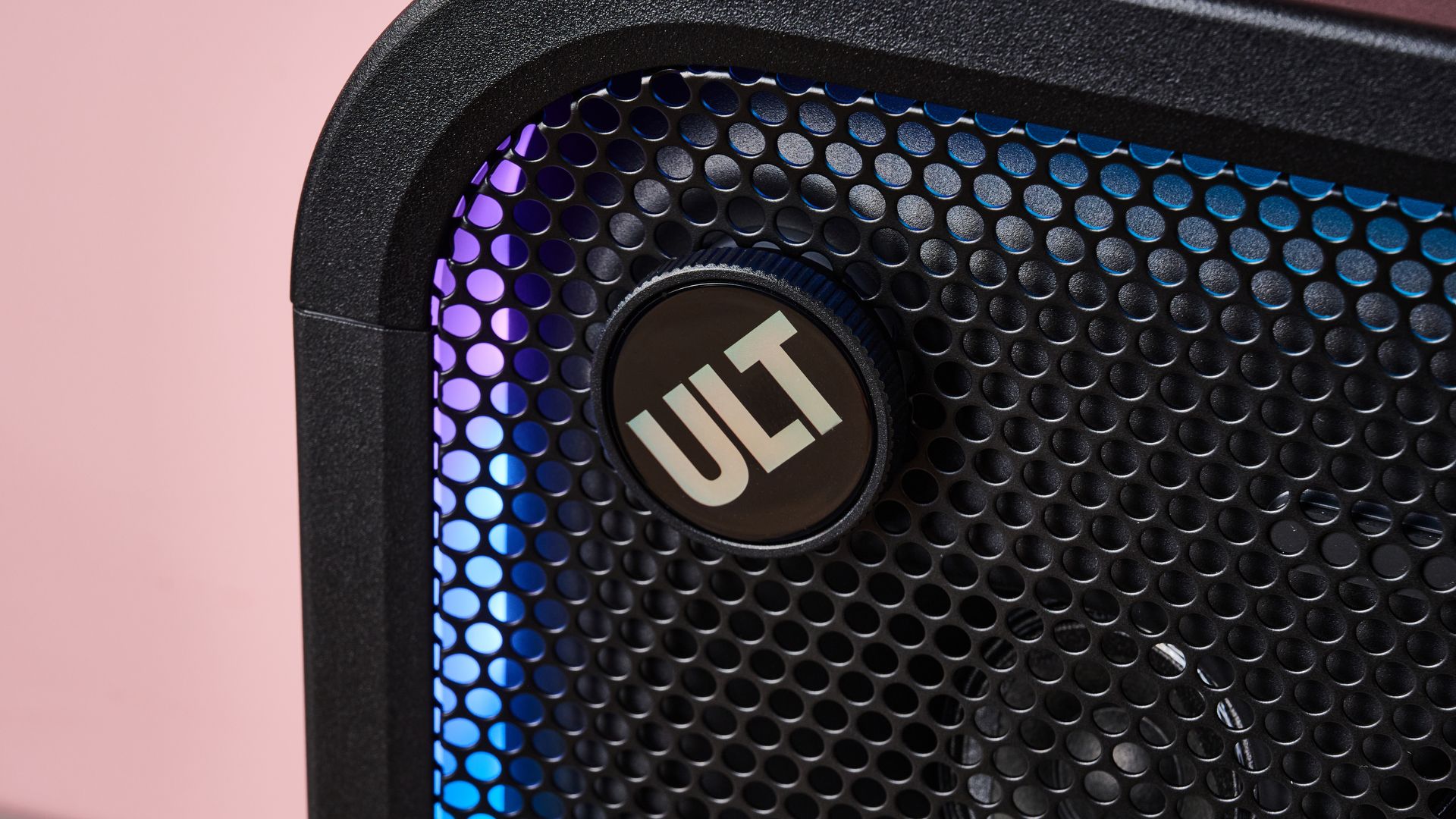
Let’s talk about the lights, actually, because they’re a big part of this model’s aesthetic. They look fantastic in my opinion — sure, they’re RGB, not the classy stage-style lights of a model like the Marshall Bromley 750 — but they’re still tasteful and flashy. You can customize the pattern and color of the lights in the Sound Connect app or via physical controls, and these can even synchronize to the rhythm of your tunes for a truly immersive experience.
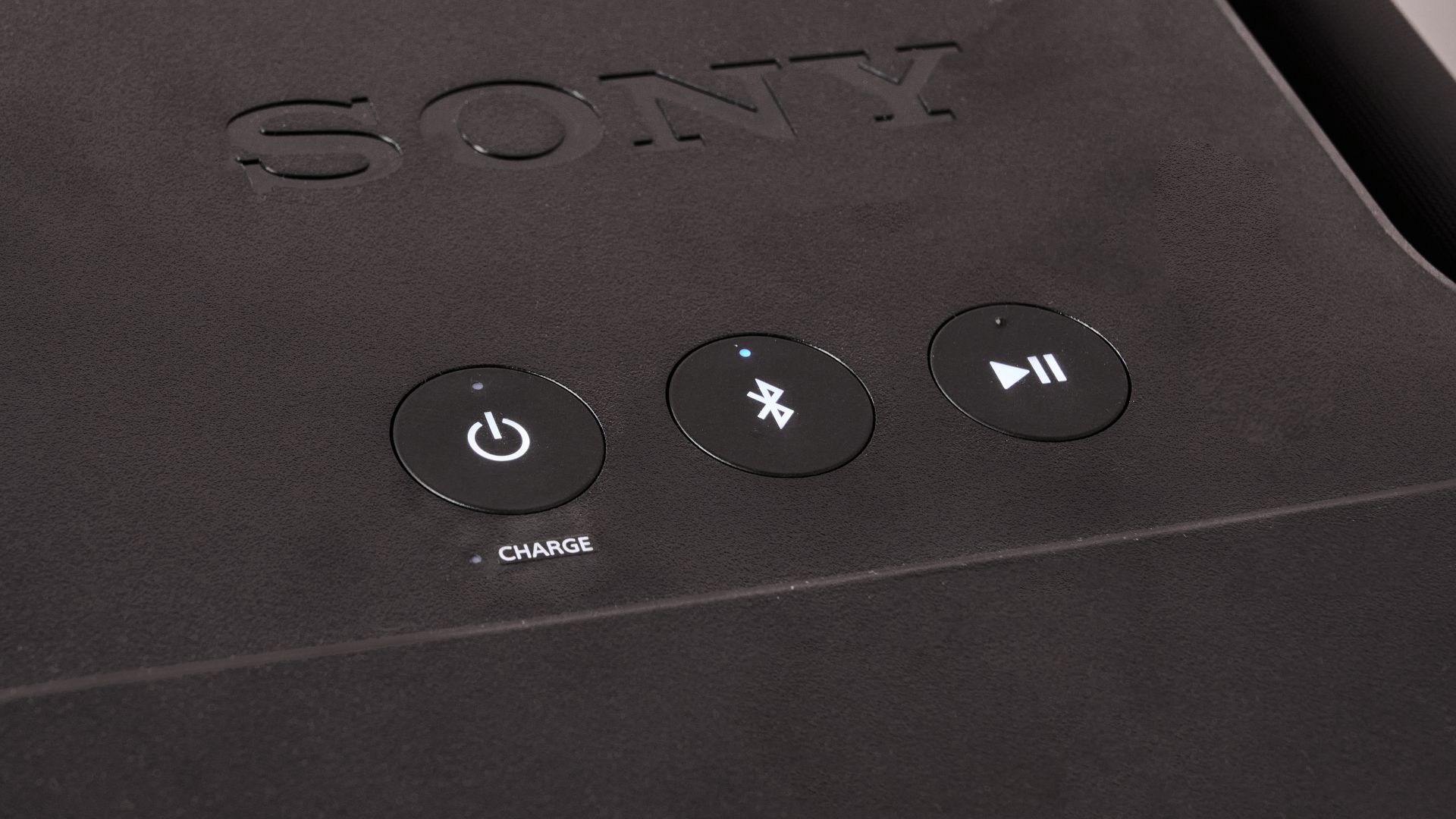
More generally, the build quality of the ULT Tower 5 is strong. Yes, it’s pretty hefty, and doesn’t have a pull-out handle for traveling over longer distances, but it’s nowhere near as cumbersome as its larger sibling, the ULT Tower 7. Its plastic exterior looks surprisingly premium, its rounded appearance is sleek, and even the ULT icon has some appeal — it can be twisted to adjust volume, or pressed to switch EQ mode.
As the speaker is designed for both indoor and outdoor use, it’s also equipped with IPX4 waterproofing. This means that it can survive multi-directional water splashes without issue. Sure, this is fairly standard for a party speaker like this and by no means ground-breaking, but it should be enough to keep the speaker alive if you spill some water on it or if there’s some light rain.
How about battery life? Well, the Sony ULT Tower 5 provides up to 20 hours of playback with its lights turned off, which is good for a model of this size and power. It’s more than a rival like the JBL PartyBox 130 too, which can deliver up to 16 hours. If you need to squeeze a bit more life out of the ULT Tower 5, there’s also a Stamina mode, which gives you extended battery life at the expense of lighting and ULT Power Sound. Still, if you want the full experience, you can still use the ULT Tower 5 while it's connected to the mains, and juicing it back up doesn’t take all too long — you can get about 100 minutes of playback from just a 10 minute charge.
The big question, then, is the Sony ULT Tower 5 worth the money? My answer: absolutely. This model comes in at $449.99 / £349 / AU$549, and for a speaker of this size and power, with so many features and an eye-catching design, I think you’re getting plenty of bang for your buck. When you consider that a far smaller Bluetooth speaker like the JBL Xtreme 5 is just $50 / £20 less than that, the value on offer here is striking.
I’ve tested party speakers that can rival the ULT Tower 5, like the Marshall Bromley 450 for instance. And while that model sounds spectacular and looks even better than the ULT Tower 5, it does come in at about $350 / £200 / AU$500 more. So, if you want a party speaker with great sound and features at an enticing price, then the Sony ULT Tower 5 gets a full recommendation from me.
(Image credit: Future)
Sony ULT Tower 5 review: price & release date
Priced at $449.99 / £349 / AU$549
Released in September 2026
The Sony ULT Tower 5 was released in September 2026 alongside two sibling models, the larger Sony ULT Tower 7, and the gigantic Sony ULT Max. It’s priced at $449.99 / £349 / AU$549, which is a seriously tempting price for a speaker with so much power and such advanced features.
For reference, that’s only about $50 / £20 more than the JBL Xtreme 5 would cost you, which is a far smaller, less meaty model. It’s also in a very similar ballpark to a rival like the JBL PartBox 130, and considerably cheaper than premium alternatives like the Marshall Bromley 450.
Sony ULT Tower 5 review: specs
Weight
28lbs / 12.7kg
Dimensions
14.1 x 21 x 11 inches / 358 x 534 x 280mm
Connectivity
Bluetooth 5.3, RCA, XLR (in and out), USB-A, USB-C, mic input (6.3mm)
Battery life
20 hours
Speaker drivers
1x 230mm woofer, 2x 60mm tweeters
Waterproofing
IPX4
(Image credit: Future)
Should I buy the Sony ULT Tower 5?
Attribute
Notes
Score
Features
Swathe of connectivity methods, broad EQ options, customizable lighting, LDAC for higher-res listening.
5/5
Performance
Excellent bass for the speaker’s size, clean mids and tight highs, lacks 360 sound of larger models.
4.5/5
Design
Striking look with appealing and dynamic lighting, well-built, IPX4 waterproofing is decent but nothing special.
4.5/5
Value
A simply stellar price for the power and quality on offer.
5/5
Buy it if…
You want an all-in one party solution The ULT Tower 5 feels like the definitive, affordable party speaker. It has a wide range of connectivity options, meaning it's good for casual listening, DJing, karaoke… you name it. This model has it all.
You’re looking for a speaker with a striking look I love the look of the Sony ULT Tower 5 — it’s striking, with bold, customizable lighting, a very solid standard of build, and an appealing, curved design. If you want a speaker that stands out, this is a solid choice.
Don’t buy it if…
You’re looking for 360-degree audio Due to the lack of rear-facing drivers, the Sony ULT Tower 5 is unable to whip up top-tier audio from all angles — it only sounds at its best when facing the listener. If you want more convincing 360-degree sound, it's worth checking out the larger ULT Tower 7 or Max models, or going for a speaker like the Marshall Bromley 450, which sounds great no matter where you’re standing.
You need top-tier waterproofing While IPX4 is the standard rating for a party speaker of this ilk, it’s by no means anything special. It should get you through some light spills or rain, but I’ve tested similar rivals that go up to IP55, which protects against dust ingress and low-pressure water jets.
Sony ULT Tower 5 review: also consider
Sony ULT Tower 5
JBL PartyBox 130
Marshall Bromley 450
Price
$449.99 / £349 / AU$549
$449.99 / £349.99 / AU$595
$799.99 / £549.99 / AU$1,079
Weight
28lbs / 12.7kg
24.8lbs / 11.3kg
26.9lbs / 12.2kg
Dimensions
14.1 x 21 x 11 inches / 358 x 534 x 280mm
11.7 x 22.6 x 11.9 inches / 29.8 x 57.5 x 30.3mm
19.4 x 14.2 x 10.3 inches / 492 x 359.9 x 260.9mm
Connectivity
Bluetooth 5.3, RCA, XLR (in and out), USB-A, USB-C, mic input (6.3mm)
Bluetooth 6.0, 3.5mm (in and out), optical, USB-C, 2x mic inputs (6.3mm)
JBL PartyBox 130 JBL is extremely dominant in this segment of the speaker market and it’s not hard to see why. They produce flashy party speakers with impactful bass output, eye-catching lights, and a huge array of connectivity options. And the JBL PartyBox 130 is no exception. It doesn’t quite offer as much battery life as the ULT Tower 5, but it does provide dual woofers, karaoke functionality, and the same IPX4 waterproofing.
Marshall Bromley 450 OK, this one’s considerably pricier than the ULT Tower 5, but it earns its price in a number of ways. First of all, it has a considerably more fleshed-out driver configuration than Sony’s speaker, with dual subwoofers and four full range units (plus a couple of passive radiators). It also has a seriously luxurious look with a stunning faux-leather exterior, stage light-inspired LEDs, and eye-catching golden details. And that battery life… So yes, you get what you pay for with the Bromley 450, but it can’t compete with the sheer affordability of its Sony rival. Read my full Marshall Bromley 450 review.
How I tested the Sony ULT Tower 5
(Image credit: Future)
Tested in our music testing space at Future Labs and outdoors
Mainly streamed tunes over Tidal
Tried Party Chain functionality alongside ULT Tower 7
I spent countless hours listening to music on the Sony ULT Tower 5, which I tested indoors at our music testing room at Future Labs, as well as outdoors in the office parking lot. This enabled me to test the fidelity of audio in a quiet and controlled space as well as a busy, noisy environment.
For the most part, I connected to the ULT Tower 5 over Bluetooth and played tracks via Tidal on my Xiaomi 17 phone, which supports LDAC. To begin with, I sifted through the TechRadar reference playlist, but I also listened to hours worth of tunes from my personal library, including a lot of bass-heavy bangers. On top of this, I tried pairing the ULT Tower with the Sony ULT Tower 7 to test out the Party Chain function.
More generally, I’ve spent years testing audio gear here at TechRadar, where I serve as a Senior Reviews Writer. I’ve reviewed everything from premium wireless headphones like the Sony 1000X The Collexion to Dolby Atmos soundbars, like the JBL Bar 1300MK2. Of course, I’ve also tested a huge array of Bluetooth speakers as well, including party-ready models like the LG xboom Stage 301 and the Marshall Bromley 750.
49ers vs Seahawks kick-off: Sun, Oct 11 at 4.25pm ET / 9.25pm BST / 7.25am AEDT (Mon)
The 49ers vs Seahawks is the game of Week 5 and arguably the game of the 2026 NFL season so far. Not only are they fierce NFC West rivals, but San Francisco are the league's joint-second top-scorers, while Seattle have conceded fewer yards and passing yards than anyone else.
Simply put, if there's a defense that can stifle the 49ers' red-hot Brock Purdy-led offense it's the Seahawks', and if there's an offense that break through Seattle's vaunted lines it's San Fran's.
And then there are the coaches. Kyle Shanahan and Mike Macdonald took no time to forge a mutual aversion, and it's the Seahawks coach who's just about had the upper hand. He was on the losing end of their first encounter two years ago, but the Hawks have since held the Niners to fewer than 11 points per game across four meetings.
And Seattle's two most recent victories over San Francisco were as important as they were emphatic. With the NFC's No.1 seed on the line, they crushed them 13-3 in January, before knocking them out of the playoffs off the back of a 41-6 pasting.
Purdy is yet to be sacked this season, but Leonard Williams and Ernest Jones IV will be throwing everything at him at Lumen Field this Sunday.
Read on as we explain how to watch 49ers vs Seahawks for free.
Can you watch 49ers vs Seahawks for free?
Yes. 49ers vs Seahawks is being shown on free-to-air Channel 5 and 5 in the UK, and on Virgin Media Two and Virgin Media Play in Ireland.
Traveling abroad right now? You can use a VPN to watch 49ers vs Seahawks for free as if you were right at home.
Use a VPN to watch 49ers vs Seahawks live streams
A VPN is a handy piece of software that can make your device appear as if it's back in your home country, so you can unlock your usual streaming services. One of our favorites is IPVanish – it does everything and comes with up to 83% off.
Get IPVanish and stream 49ers vs Seahawks from anywhere.View Deal
How to watch 49ers vs Seahawks live streams in the US
In the US, the 49ers vs Seahawks game is being shown on Fox and Fox One.
Fox One starts at $19.99/month or $99/year after a 3-day free trial.
Fox is carried by several OTT streaming platforms, including YouTube TV, Hulu + Live TV, DirecTV Stream and the Fubo Sports + News plan, each of which offers new customers a free trial and provides near-comprehensive coverage of the NFL this season.
Sling TV's $19.99/month Select plan also include access to the Fox One app, while its $45.99/month Blue plan carries Fox.
Outside of the US?IPVanish can unblock your stream from anywhere in the world.
How to watch 49ers vs Seahawks live streams in the UK
In the UK, 49ers vs Seahawks is free-to-air on Channel 5, with live streaming available via the 5 platform.
If you're traveling outside of the UK, you can make use of IPVanish to access that free 49ers vs Seahawks coverage.
It's also available to watch on Sky Sports Main Event, Sky Sports NFL and Sky Sports Football.
Sky Sports packages start at £35/month, with £24/month pricing available to existing Sky customers. You can also tune in via a NOW Sports membership that carries the Sky Sports channels.
How to watch 49ers vs Seahawks live streams in Australia
In Australia, the 49ers vs Seahawks game is being shown on ESPN via Foxtel, with live streaming available via Kayo Sports.
Kayo Sports subscriptions start at AU$30 per month after a 7-day free trial, as detailed above. Equally, you can get your first month for AU$1.
It's also available to stream live on NFL Game Pass on DAZN, which is showing every remaining game, including the Super Bowl.
Prices start at AU$149 for the season if you pay upfront, rising to AU$34.99/month if you commit to 12 months, and AU$33.99/week on a rolling basis.
Not in Australia right now? You can simply use a VPN like IPVanish to watch the action as if you were back home.
How to watch 49ers vs Seahawks live streams in Canada
(Image credit: Other)
The 49ers vs Seahawks game is available to watch on DAZN in Canada.
DAZN, which is showing every 2026 NFL fixture, starts at CA$24.99/month.
It's also being shown on CTV, which is available for free if you have a TV antenna or cable. CTV requires your TV provider login details, but is also available via pay-TV streaming platform Crave.
If you're out of Canada but still want to tune in, explore the VPN route set out above, which will help you access your accounts from anywhere.
What is the 49ers vs Seahawks start time?
The scheduled 49ers vs Seahawks kick-off time on Sunday, October 11 is 1.25pm PT local time in Seattle, which is 4.25pm ET / 9.25pm BST.
That's 7.25am AEDT on Monday, October 12 in Australia.
What is the 49ers vs Seahawks head-to-head?
The 49ers and Seahawks have faced off on 57 previous occasions, San Francisco winning 24 of those games and Seattle 33.
Can I watch 49ers vs Seahawks on my mobile?
Of course, most broadcasters, like 5, have streaming platforms that you can access through mobile apps or via your phone's browser.
You can also stay up-to-date with the latest NFL news and plays on the official social media channels on X/Twitter (@NFL), Instagram (@NFL), TikTok (@NFL) and YouTube (@NFL).
We test and review VPN services in the context of legal recreational uses. For example:1. Accessing a service from another country (subject to the terms and conditions of that service).2. Protecting your online security and strengthening your online privacy when abroad.We do not support or condone the illegal or malicious use of VPN services. Consuming pirated content that is paid-for is neither endorsed nor approved by Future Publishing.